
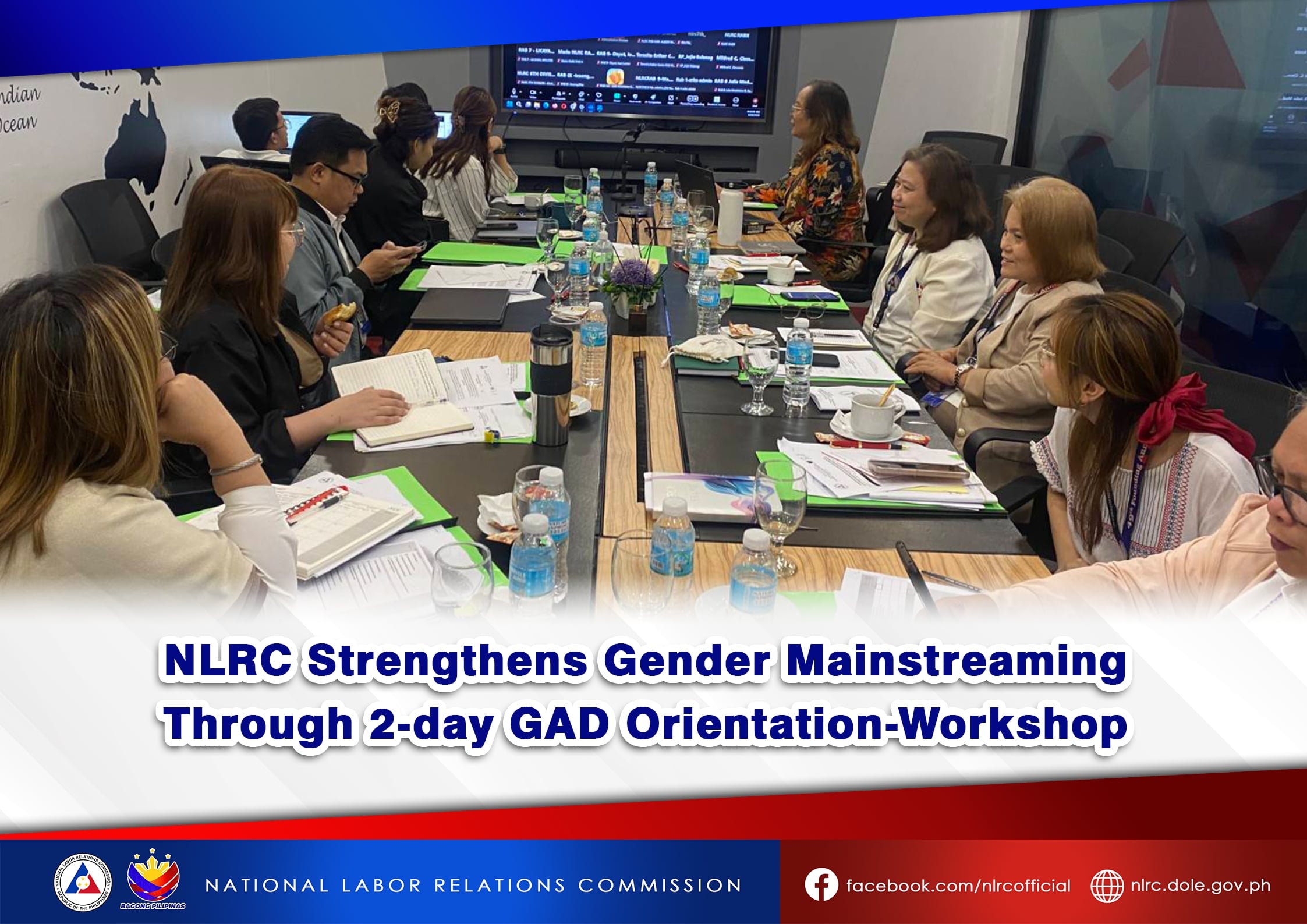
NLRC Strengthens Gender Mainstreaming Through 2-day GAD Orientation-Workshop
Quezon City - The National Labor Relations Commission (NLRC) conducted a two-day Gender and Development (GAD) Orientation-Workshop on the Harmonized Gender and Development Guidelines (HGDG) for Project Design and the Project Implementation, Monitoring, and Evaluation (PIMME) Checklist on February 18-19, 2025.
Members of the NLRC GAD Focal Point (GFP) System actively participated in the event, which aimed to reinforce gender mainstreaming in the Commission’s programs and initiatives. The workshop familiarized participants with the elements of the HGDG tool and its integration into the project development cycle, ensuring that NLRC’s programs and projects are gender-sensitive and responsive.
In line with NLRC Chairperson Grace E. Maniquiz-Tan’s policy that all NLRC programs and policies must be gender-responsive, Labor Arbiter Kristine Rosary E. Yuzon-Chaves, Chairperson of the GFP Technical Working Group, reaffirmed the Commission’s unwavering support for gender and development initiatives. She emphasized the importance of utilizing the HGDG tool to ensure that NLRC programs equitably benefit both women and men in the workplace.
Ms. Jocelyn B. Balanag, Department Legislative Liaison Specialist of the Commission on Higher Education, facilitated the seminar, sharing valuable insights and recommendations on gender mainstreaming. The first session focused on the project identification and design stage elements of the HGDG tool for the GAD Plan and Budget, while the second session explored the PIMME checklist for the GAD Accomplishment Report. Participants actively engaged in discussions, sharing key takeaways on learning and unlearning strategies for developing gender-responsive programs and the importance of creating means of verification (MOVs) with a gender lens.
Labor Arbiter Mona Lisa M. Vargas, Acting Executive Clerk of Court IV, emphasized that the lessons gained from the orientation-workshop present an opportunity to adopt best practices and enhance gender sensitivity and responsiveness within the NLRC.
The initiative reflects the Commission’s continuous efforts to promote gender equity and inclusivity in its programs, further strengthening its commitment to fostering a fair and gender-responsive labor sector.